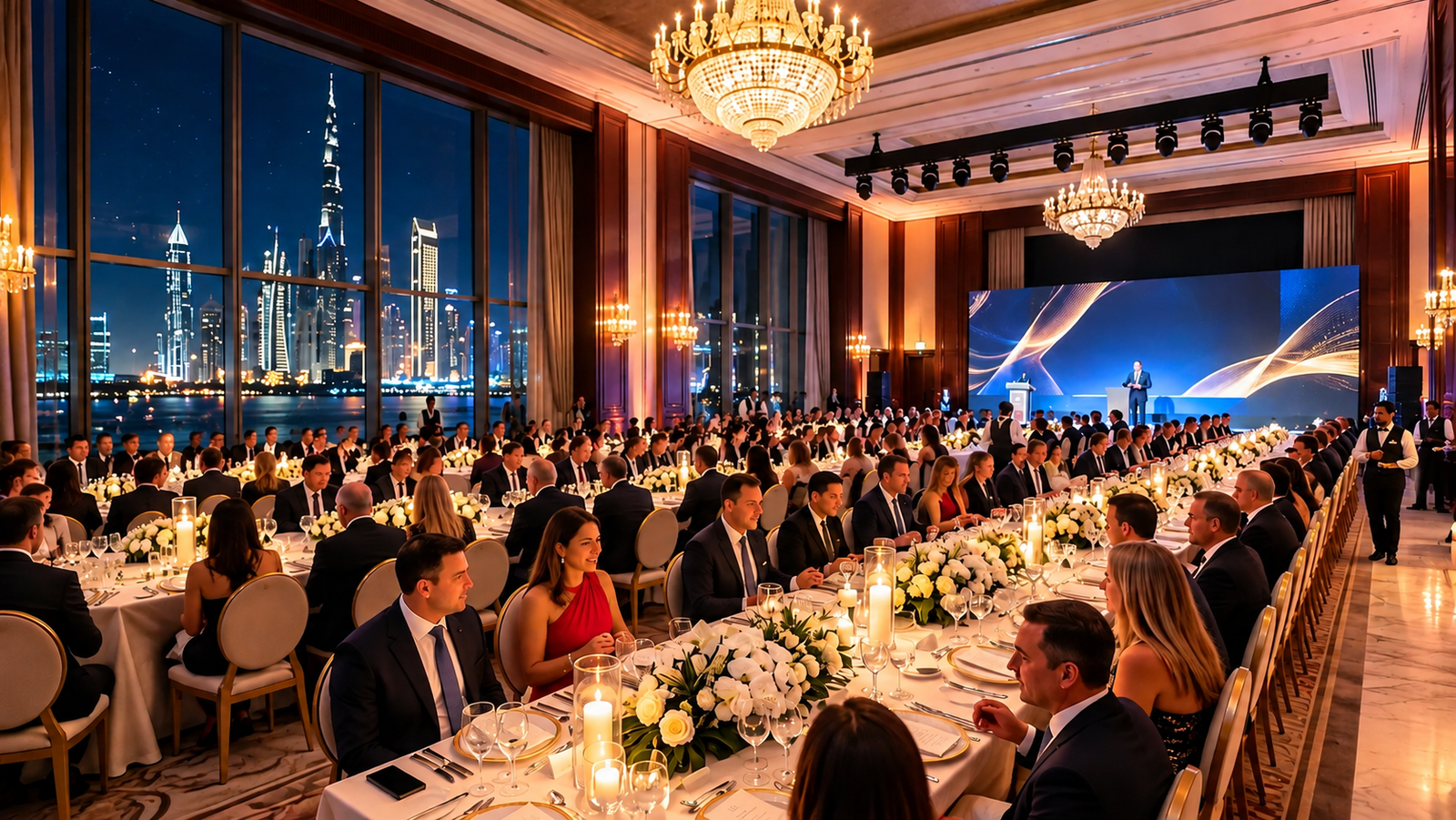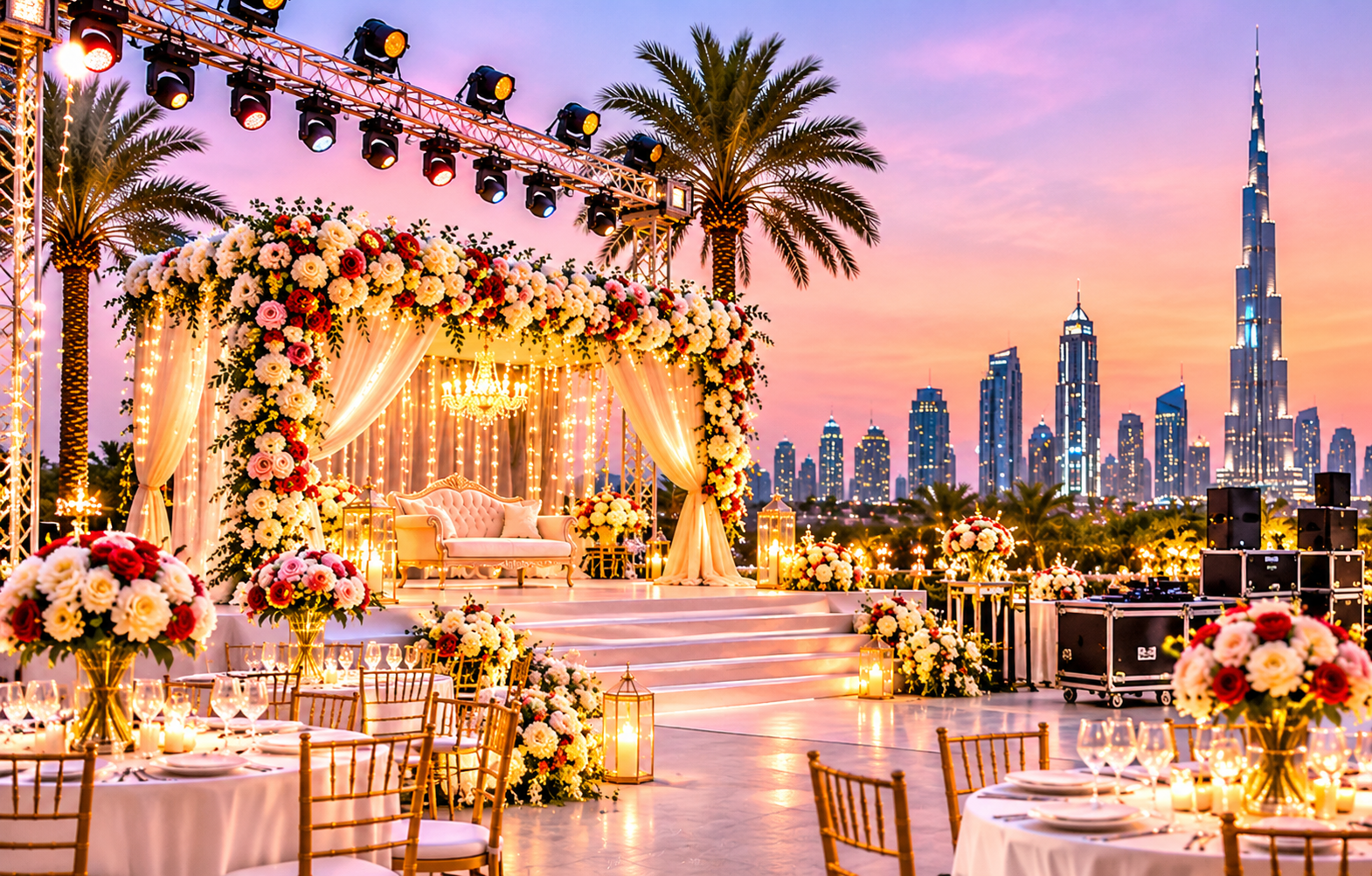
Event production companies in Dubai handle the technical planning, equipment, staging and live execution behind major conferences, exhibitions, product launches, gala dinners and corporate celebrations. Their work often includes sound engineering, professional lighting, LED screens, stage construction, livestreaming, rehearsals and on-site show management.
For large-scale events, effective production is about much more than equipment. It brings together creative direction, venue coordination, safety planning, supplier logistics and a reliable event-day schedule. This guide explains what an event production team typically manages, what affects production costs and how to choose the right partner in Dubai.
What is event production for a large-scale event?
Event production is the technical and operational work that turns an event concept into a functioning experience. For a major conference, exhibition, gala dinner, awards ceremony or brand launch, the production team coordinates staging, sound, lighting, video, show control, infrastructure and live execution. Event production companies in Dubai may manage the full technical scope or work alongside an event planner, venue team and specialist vendors. The exact responsibilities depend on the contract, the type of event and the venue’s technical requirements. A successful production is not simply about impressive screens: it must be safe, accessible, reliable and aligned with the event’s objectives.
How event production differs from event management
Event management usually covers the wider planning process: objectives, budgeting, guest experience, venue selection, suppliers, invitations, hospitality and schedules. Event production concentrates on how the event is physically and technically delivered. That can include stage engineering, audiovisual systems, rehearsals, cueing and show-day troubleshooting. For large-scale events in Dubai, the two functions overlap and should collaborate from the start. A clear responsibility matrix helps prevent assumptions about who approves floor plans, books equipment, coordinates speakers or signs off safety documentation. Learn more about the wider process in our guide to what an event planner in Dubai does.
1. Event concept development and technical feasibility
Production planning begins by translating creative ideas into a workable brief. The team reviews the event purpose, audience size, venue dimensions, show format, branding requirements, programme length and available budget. It then evaluates technical feasibility: where screens can be placed, how guests will see the stage, what power is available and whether the proposed structures fit the venue. This stage may include site surveys, initial drawings, equipment specifications and production schedules. Resolving these questions early is particularly important for large corporate events, where a late change to the stage or room layout can affect multiple suppliers.
2. Stage design, fabrication and installation
The stage is often the focal point for conferences, product launches and award ceremonies. Event production companies may design or coordinate stage platforms, branded backdrops, lecterns, scenic structures, steps and accessible routes. They must also consider speaker sightlines, camera angles, stage traffic and the safe positioning of equipment. Custom fabrication, structural calculations and rigging requirements should be handled by appropriately qualified specialists, with venue approval where required. A stage that looks effective in a rendering must also support presenters, performers and production crew throughout the event. Detailed installation and dismantling schedules help prevent conflicts with catering, décor and venue operations.
3. Professional sound systems and audio engineering
Audio quality can determine whether an audience understands the event. Production teams specify microphones, loudspeakers, mixers, monitoring systems and playback equipment based on room acoustics, audience distribution and programme requirements. A conference with panel discussions has different audio needs from a gala with live entertainment. Engineers may also plan wireless frequency coordination, backup microphones, sound checks and recording feeds. For multilingual programmes, interpretation and related audio systems may need to be integrated. Clear speech, balanced levels and reliable redundancy are more valuable than choosing equipment solely by size or brand.
4. Lighting design for atmosphere and visibility
Lighting has both creative and practical roles. It helps guests see speakers, supports video recording, highlights products and creates transitions between programme segments. A production team may develop a lighting plot covering front light, stage washes, moving fixtures, accent lighting and control cues. The design must suit the venue’s power supply, ceiling limitations and any restrictions on rigging. Lighting for a formal corporate conference is typically different from lighting for an awards ceremony or entertainment-led launch. Testing lighting together with cameras and LED screens reduces distracting reflections and helps maintain consistent visual quality.
5. LED screens, projection and visual content
Large events often rely on LED video walls, projection systems, confidence monitors, presentation laptops and video switching equipment. The production team determines screen dimensions, viewing distances, resolution requirements and safe placement. It also coordinates presentation formats, motion graphics, sponsor slides, playback files and backup sources. Content should be tested on the actual display system before the event, particularly when multiple presenters or external agencies provide files. Good visual production supports the message rather than overwhelming it. For hybrid events, the screen programme and livestream feed may require separate layouts and technical checks.
6. Livestreaming, recording and hybrid-event technology
A conference or product launch may need to reach people beyond the physical venue. Event production companies can coordinate cameras, vision mixing, audio feeds, streaming encoders, recording, remote speaker connections and platform integration. The scope should specify whether the event needs a simple single-camera stream or a multi-camera broadcast with graphics and remote participation. Internet connectivity, audio-video synchronisation, permissions and contingency arrangements must be tested in advance. Recording and distribution requirements should also be clarified, including who owns the footage and how it will be delivered after the event.
7. Event infrastructure, power and technical logistics
Behind the visible event design is a substantial operational system. Production logistics can include power distribution, cabling, equipment transport, loading schedules, crew access, storage, barriers and coordination with venue engineering teams. Cable routes must avoid creating trip hazards or obstructing exits. The team should document equipment quantities, installation windows and the sequence in which vendors enter and leave the venue. Outdoor events can require additional weather protection and site-specific infrastructure. These details are less visible to guests, but they are essential to reliable delivery and a smooth handover between suppliers.
8. Technical drawings, permits and safety coordination
Large-scale events may require venue approvals, event permissions, risk assessments and technical documentation depending on their location, format and structures. Production teams often prepare floor plans, stage drawings, rigging information, equipment specifications and installation schedules for review. The organiser and venue must confirm which approvals apply to the specific event; requirements are not identical across Dubai venues and event types. For current destination and visitor information, see the official Visit Dubai website. For permissions and safety, follow the relevant venue and government authority’s official guidance rather than assuming a general checklist is sufficient.
9. Rehearsals, show calling and live cue management
A technically complex event needs a coordinated run of show. The production manager and show caller may oversee speaker rehearsals, presentation checks, music cues, lighting changes, video playback and transitions between sessions. The schedule should identify who gives each cue, who communicates with backstage staff and how changes are approved. For conferences, this might involve panel microphones and presentation handovers; for award ceremonies, it may include nominee videos, walk-on music and stage lighting. Rehearsals reveal timing problems and technical issues while there is still time to correct them.
10. On-site crew, troubleshooting and dismantling
Production does not end when guests arrive. Technical operators, stage managers, engineers and crew remain responsible for equipment performance, transitions and incident response during the event. The staffing plan should match the complexity of the show, with clear escalation procedures and backup arrangements for critical systems. After the event, the team manages shutdown, equipment checks, safe dismantling, loading and venue handover. The quotation should state whether post-event services such as recordings, asset returns and damage reporting are included. A disciplined close-out process helps protect the venue and avoid unexpected additional charges.
What types of large-scale events need production support?
Corporate conferences and summits often need speaker audio, presentation screens, recording and carefully timed sessions. Product launches may require branded stages, dramatic lighting, reveal mechanisms and coordinated video playback. Exhibitions can involve multiple stands, shared power and audiovisual installations. Gala dinners and awards ceremonies need stage management, lighting transitions, entertainment sound and reliable show cues. Outdoor public-facing events introduce further logistical and weather considerations. The right production scope depends on programme complexity as well as attendance: a smaller broadcast-heavy event can be technically more demanding than a larger but simpler gathering.
How to evaluate an event production company in Dubai
Ask prospective suppliers for experience with events similar in format and scale to yours, not just photographs of attractive stages. Request a technical proposal that explains the equipment, staffing, installation timetable, venue requirements and contingency measures. Confirm whether the company owns or rents equipment, who supervises subcontractors and who is accountable for the final show. Discuss power, internet, sound checks, rehearsals and emergency procedures. A supplier should be able to explain technical trade-offs in clear language and adapt the scope to your objectives rather than selling the largest available setup.
What affects the cost of event production in Dubai?
Production costs vary with venue size, show duration, technical complexity, equipment quantities, custom fabrication, crew numbers, transport and setup time. LED screens, staging, lighting and livestreaming are often quoted as separate components, but some suppliers bundle them. Ask whether the proposal includes technical design, installation, rehearsals, live operators, standby equipment, dismantling and applicable taxes. Comparing itemised quotations is more useful than relying on a generic per-person rate. Our Dubai event management cost guide explains broader planning fee structures and cost considerations.
How far in advance should production planning begin?
Begin technical discussions once the event format, approximate audience size and venue options are known. Events involving custom staging, multiple screens, broadcast production or substantial infrastructure need additional time for drawings, approvals, equipment availability and rehearsals. Set deadlines for speaker presentations, branded content, floor-plan changes and final show cues. Confirm which decisions can still change after equipment and crew are booked. Early planning improves coordination between event management, production, catering, security and the venue, reducing the likelihood of expensive last-minute adjustments.
Large-Scale Event Production Checklist
| Production Area | Typical Responsibilities |
|---|---|
| Stage and scenic design | Stage platforms, backdrops, lecterns and safe access |
| Audio production | Microphones, speakers, mixing and sound checks |
| Lighting | Stage visibility, atmosphere and programmed cues |
| Video and screens | LED walls, projection, playback and switching |
| Hybrid production | Cameras, streaming, recording and remote speakers |
| Show management | Rehearsals, run of show, cues and crew coordination |
| Technical logistics | Power, cabling, transport, setup and dismantling |
Adnan Events – Event Management and Production Coordination in Dubai
Adnan Events is a Dubai-based event management company supporting clients with the planning and coordination of corporate gatherings, social occasions and large-scale celebrations. From understanding your event objectives and venue requirements to discussing staging, audiovisual needs and supplier coordination, our team can help you explore a practical approach to event delivery. The appropriate production scope depends on the event brief, technical requirements and available partners.
Plan Your Large-Scale Event in Dubai with Adnan Events
Planning a conference, product launch, gala dinner or major corporate event in Dubai? Share your preferred date, venue, expected attendance, programme format and technical requirements with Adnan Events. Our team can discuss your event goals, coordination needs and the next steps for shaping a realistic production brief. Whether your event calls for staging, lighting, audiovisual support or comprehensive planning, contact us to explore the options and request a personalised proposal based on your requirements.
Frequently Asked Questions
What do event production companies in Dubai do?
They typically coordinate staging, sound, lighting, screens, technical logistics, rehearsals and live show delivery, depending on the agreed scope.
What is the difference between event management and event production?
Event management oversees the wider event plan and guest experience, while production focuses on technical and physical delivery. The roles often overlap.
Do production companies provide LED screens and audiovisual equipment?
Many do, directly or through specialist suppliers. Confirm equipment specifications, installation and operators in the quotation.
Can event production companies manage livestreaming?
Some provide camera, streaming and recording services. Confirm internet requirements, platform integration and backup plans.
Who is responsible for event permits and safety approvals in Dubai?
Responsibility depends on the event and contract. Confirm requirements with the venue and relevant authorities, and document who handles each approval.
How much does large-scale event production cost in Dubai?
Costs depend on venue, equipment, staging, crew, show duration and complexity. Request an itemised proposal rather than relying on a generic estimate.
How early should I hire an event production company?
Start once the venue and event format are taking shape, especially for custom staging, hybrid broadcasts or complex technical setups.
Can Adnan Events help coordinate production for corporate events?
Contact Adnan Events with your event brief to discuss event management and production coordination requirements.